

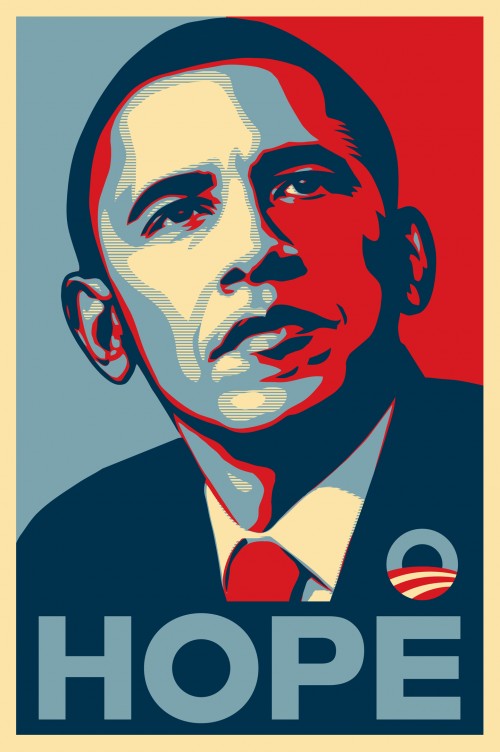
Hope is here on day four of Holly Days partly because it resonates with of Christmas Eve, with its tiny tots with their eyes all aglow and the promise of peace on earth good will toward men. My musing this year on free will has me wondering how ideas about fate might affect our hopefulness. It’s common to hear folks say that everything happens for a reason, that the universe is unfolding as it should. The determinist trend in cognitive science could be seen to support this, even though most folks who use it take it as metaphysical, either way, if you’re powerless you’re also blameless. Some may try to be hopeful by asserting that the universe or some omnipotent and benevolent supreme being is in charge, but the problem of evil never fails to undermine this reasoning, making this belief in fate more often support a hopeless resigned cynicism, even if clothed in hopeful platitudes, that the world is doomed to go to hell in a handbasket.
To me, the belief that we can surmount almost any obstacle seems essential to an active and meaningful life, and is part of what leads me to push back against this new determinism. I find my hope not by relying on some beneficent master plan but on a collective self confidence in our cumulative wisdom. I suspect that many people of faith harbor secret and profound hopelessness and cynicism, however with no other model with which to construct hope and meaning, are left with hollow ritual and habitual if insincere affirmations. The current availability of notifications of shocking horror in each of our pockets has so many folks, even ones with strong religious traditions, anticipating nothing but wanton death and destruction. This sort of silent nihilism is bracketed on one side by prophesy of an avenging yahweh’s end times, and on the other by a vision of an equally omnipotent capitalist cabal fiddling gleefully in their gilded bubbles as the the world burns.
I counter with two metaphors for righteous action based in the same chaos and systems based models used by these new determinists. One is sort of the inverse of Steven Jobs’ ‘making dents in the universe’, where I strive instead to repair the dents I find in the universe, hammering out and filling the dents with bondo — close to the Judaic principal of tikkun olam. The other is to damp the pendulum. Marx was clearly right about the dialectic of history, tho I take issue with his narrow focus on a single axis of class and oppression. I’m sure the dialectic of history is more intersectional and functioning on multiple axes, each with its own period and incitements. In the natural world opposing forces almost always oscillate between poles with decreasing amplitude until they settle at an equilibrium. The culture war revisions we boomers championed: feminism, pacifism, civil rights, etc., were a push back against a swing towards a conformism after the war, which has lead to an counter swing. Since the end of these swings usually feature overcorrected and pathological excess, I opt for trying to dampen the swings, hoping to limit the extremes. This is a hard sell because it requires waffling: pushing back against a principals one once supported, but nevertheless I persist.
The reason I push back against this new determinism, despite my embrace of its underlying neuroscience and chaos and systems theory, is because it can be used to support these more fatalistic and nihilistic stances. Having some power to create the future feels essential to my own sense of meaning and purpose. Why try to transcend idle self gratification if not to affect the world to make things better? I am persuaded that our will is far from free, but not that it is just an illusion. It seems clear from an evolutionary psychology perspective that we must have limited but effective will and be able to participate in determining the unfolding of our lives. I would be surprised if these notable proponents of determinism, Harris and Sapolsky, who both have strong expertise in evolutionary biology, are actually making a claim of zero free will. Our minds are emergent phenomena that came to be through the evolutionary process of random trial and error, where structures cannot be handed down unless they convey some benefit. Our strong sense that we have free will and the extensive neurology that underlies our conscious minds and egos must serve some function beyond just being passive observers of the hidden masters of our destinies. We should not be able to make conscious decisions, however minor their role may be, unless they could help to protect us.
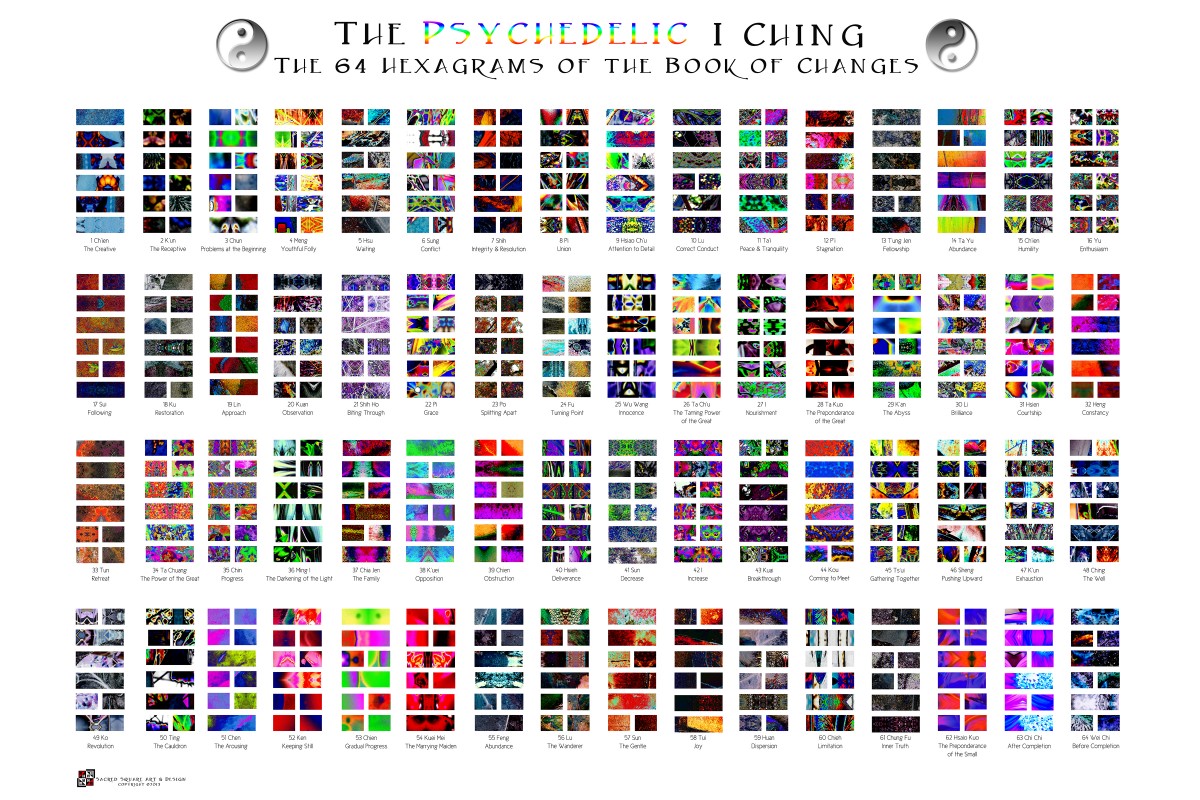
I frequently find myself trapped in an indecision loop (tho this may be some ASD glitch) where I literally take two steps in one direction, pause, think better of it, turn and take one in the other direction, pause again then reverse again, often four or five times before feel like a fool and just continue in whatever direction I end up pointing. Alan Watts defended his use of the I Ching as a forecasting tool by pointing out that he only ever wanted to consult the oracle when he was on the horns of a dilemma, his deliberation already having failed leaving him trapped in a similar indecisive loop. He argued that at that point you might as well resort to a coin toss, or better still, to throwing a hexagram that would then refer you one of the 64 hexagrams, each a short philosophical reflection from a collection of ancient wisdom. What better place to find yourself when puzzled and indecisive? I can’t imagine how the decision he made after reading a particular hexagram could possibly have been determined before he even began the decision process.
So take heart! Find hope in yourself, for hope propels us forward, helping us create the future we yearn for, and deny the ones we dread.
Jolly Hope with its tidings of comfort and joy!
And Happy

 HOLLY DAYS